
Last updated November 15, 2026
 Sweep & inspection
 Caps & crowns
 Flue relining
 Masonry repair
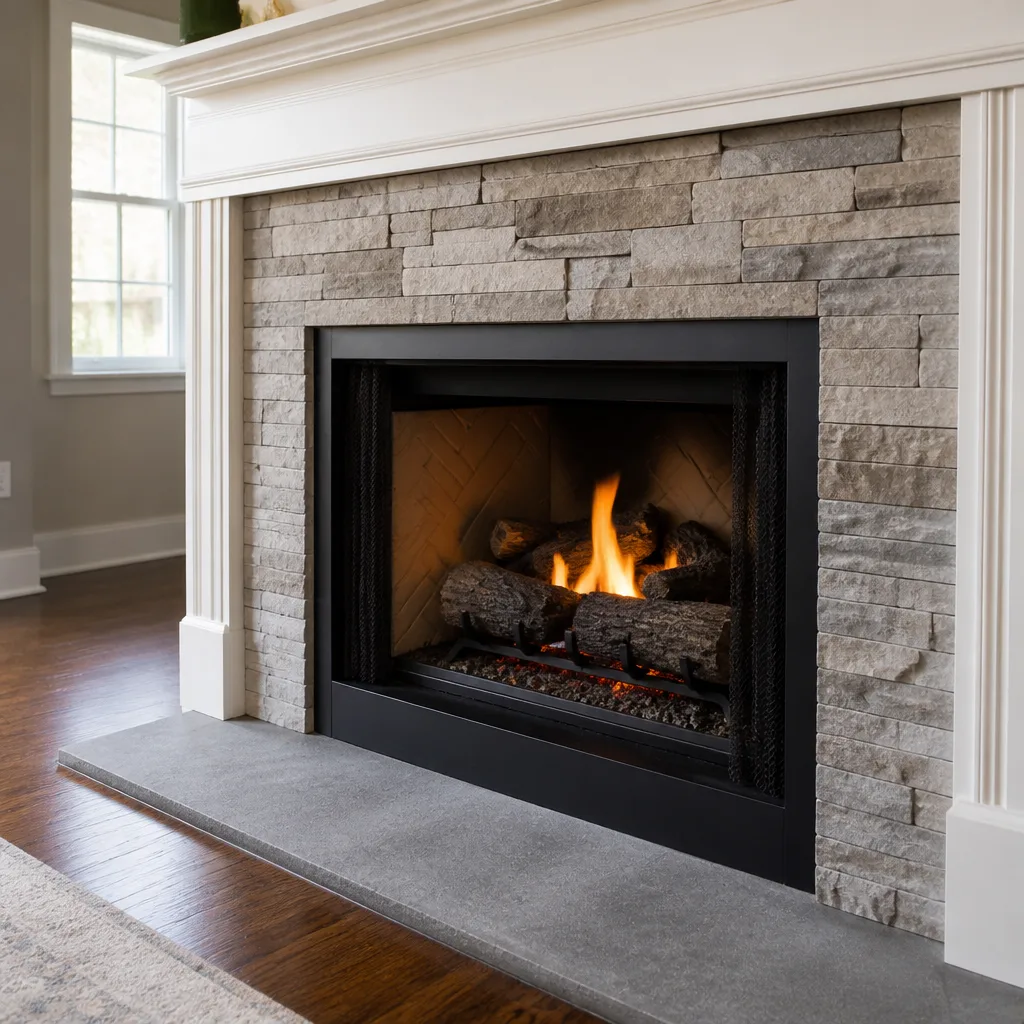 Gas fireplace service
Level 1 sweep and inspection to the NFPA 211 annual standard - flue, crown, cap, and flashing checked and photographed
Chimney sweep logs do not sweep chimneys. They loosen some creosote - which then falls where a brush and vacuum still have to collect it.
Seasonal Chimney Cleaning Care for Pasadena: Year-Round Homeowner’s Guide
Most chimney care advice assumes four seasons. Pasadena doesn’t work that way. Our fireplace season here runs roughly 90 days, from late October through January, and the other nine months are when the real damage quietly accumulates. That’s the counterintuitive part: the fire isn’t what wears your chimney down. It’s the humidity, the rain, and the long stretches when nobody looks up at the flue. This guide covers what to do in each part of the year so the chimney is ready when you finally light the first fire, and stays sound through the wet months when it’s easiest to forget.
Quick Answer
In Pasadena, the best time to schedule a chimney sweep is late summer or early fall, before the burn window opens, and the most valuable inspection is the one you do after hurricane season ends but before the first fire of the year. Summer is the season that does the most hidden damage to a Gulf Coast chimney, through moisture, wildlife, and slow mortar deterioration. Book your maintenance in the off-season rather than the October rush, and you’ll usually get more thorough work.
Styles & brands we work with
- Sweep & inspection
- Caps & crowns
- Flue relining
- Masonry repair
- Gas fireplace service
Table of Contents
- Why Summer Is the Most Damaging Season for a Pasadena Chimney
- The Right Time to Schedule a Pre-Season Sweep in a Gulf Coast Climate
- After Hurricane Season: What to Check Before the First Fall Fire
- Protecting the Cap and Crown Without Trapping Moisture
- Why Off-Season Maintenance Gets Better Availability and Better Work
- Managing the Burn Window: Creosote and the 90-Day Season
- Pasadena’s Year-Round Chimney Checklist
Why Summer Is the Most Damaging Season for a Pasadena Chimney
The fire is the easy part. What a chimney endures in Pasadena between February and September is harder on it than any winter burn season. Three forces do the damage: moisture intrusion, wildlife, and mortar deterioration, and all three work slowly and mostly out of sight.
Gulf Coast summers load the air with humidity and then dump it as heavy rain. Water finds every weak point in the exterior chimney system: a hairline crack in the crown, a loosened cap, worn flashing at the roofline. Once inside, it sits in the masonry, softening the mortar joints from the inside out. Brick and mortar are porous by nature. The slower water dries, the more freeze-free winters don’t matter, because the damage here isn’t from ice. It’s from saturation and the gradual breakdown of the mortar that holds everything together.
Wildlife is the second off-season problem. During the nine months the flue sits idle, a chimney is an open, protected cavity with a warm cap over it, which makes it attractive to birds, squirrels, and other small animals looking for shelter from the heat and the storms. Nesting material plugs the flue and creates a fire hazard the moment you light a fire in the fall.
Mortar deterioration rounds it out. Pasadena’s wet season works on the joints in the crown and the chimney shoulders hardest, and small gaps widen a little each year. Catching them early is inexpensive. Catching them after a decade of water is a masonry repair.
What you can check yourself
- Look at the crown from the ground with binoculars for cracks, crumbling edges, or a gap at the roofline.
- Check that the cap and spark screen are intact and screwed down, not shifted or missing.
- Watch for water stains or a musty smell in the firebox after heavy rain.
- Look for animal droppings, feathers, or nesting debris around the damper.
The Right Time to Schedule a Pre-Season Sweep in a Gulf Coast Climate
National chimney guides often point homeowners toward September. In Pasadena, that’s late. The better move is to book a pre-season sweep in late summer, ideally late July through August, so the work is done before the burn window opens and before the calendar fills with fall requests.
The reasoning is specific to this climate. Soot and creosote that build up over previous seasons sit in the flue through the wet months, and by late summer the year’s moisture exposure has done what it’s going to do. A sweep and inspection at that point catches the off-season damage (cracked mortar, a shifted cap, animal debris) with enough lead time to repair it before the fire gets lit. Waiting until September means discovering problems at exactly the moment every other Pasadena homeowner is discovering theirs.
There’s a second reason. Our technicians have up to 14 years of experience, and that experience says the same thing every year: the sweeps scheduled early get more careful attention than the ones squeezed into October. Fall is a pile-up. Late summer is a conversation.
How to time it around the year
- Late summer (July-August): Book the sweep and inspection. This is the sweet spot, before the burn season checklist starts.
- Late summer to early fall: Complete any repair the inspection flagged – crown, cap, flashing, or liner work – while the weather is still workable.
- Late October: First fire. The chimney is clean, swept, and inspected.
- Post-season (February-March): A post-hurricane-season inspection, covered below, to close the loop.
If the fire gets heavy use, a mid-season sweep makes sense too. Our chimney sweep service is built around that schedule.
After Hurricane Season: What to Check Before the First Fall Fire
The end of hurricane season lines up neatly with the start of the burn window in Pasadena. That’s convenient, because the storm season is exactly when a chimney takes its structural hits, and the pre-first-fire inspection is the right moment to find them.
High wind doesn’t have to touch a chimney directly to damage it. Roof movement, wind-driven rain, and debris all stress the exterior system: the crown can crack, the cap can shift or tear loose, flashing can pull away from the roofline, and the masonry can crack along a shoulder. Inside, wind-driven rain can work its way down an uncapped or poorly capped flue and soak the liner area. A post-storm inspection looks for all of it before you trust the chimney with a fire.
We handle chimney repair in Pasadena with the parts professionals actually specify – DuraFlex flexible liner systems for relining, HeatShield for resurfacing damaged flue tile, and Gelco and Famco components for the exterior cap, crown, and covers. That matters after a storm because the fix has to hold through the next one. See our chimney repair page for the full scope of what a post-storm inspection can turn up.
Post-storm inspection checklist
- Check the cap and spark screen for shifting, tearing, or missing pieces.
- Inspect the crown for new cracks or crumbling along the edges.
- Look at the flashing where the chimney meets the roof for gaps or lifting.
- Check the masonry for cracks, especially at the shoulders and near the roofline.
- Look down the flue with a flashlight for water staining or debris.
- Have the flue professionally inspected before the first fire if anything looks off.
The first five are things you can notice from the ground. The sixth is the one that matters, because the inside of the flue is where storm damage hides.
Protecting the Cap and Crown Without Trapping Moisture
The instinct to seal a chimney up tight during the wet months is understandable and often counterproductive. A chimney has to breathe. Water that gets in has to be able to get out, and the goal of a cap and crown isn’t to make the chimney airtight – it’s to shed water off the top and keep rain and animals out of the flue while still letting moisture escape.
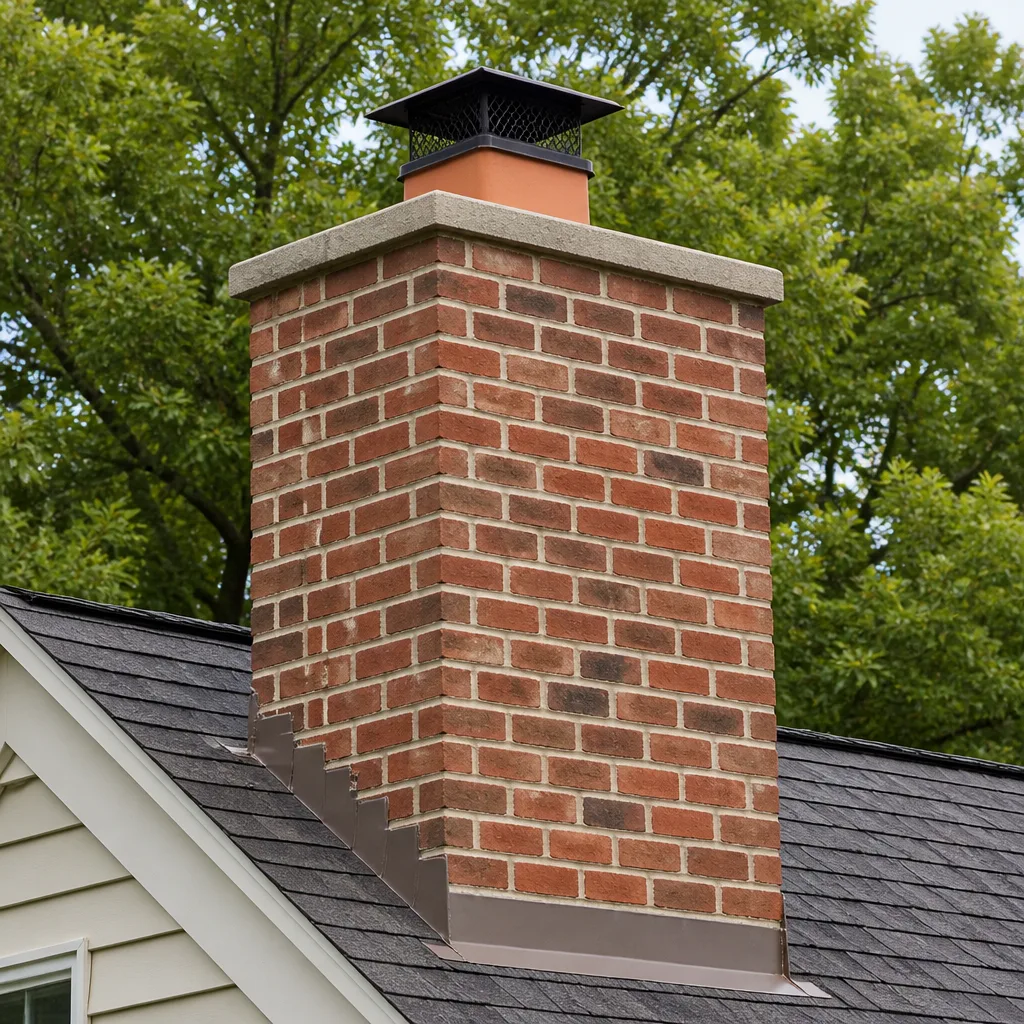
The crown is the sloped concrete or masonry top of the chimney. Its job is to direct water away from the flue opening and off the sides. When it cracks or flattens out, water pools on top and seeps down into the masonry. A proper crown has a slope and an overhang, and when it’s damaged, resurfacing or rebuilding it restores that function.
The cap sits above the flue opening, usually with a spark screen. It keeps rain, birds, and debris out while leaving the flue open to the air. The mistake we see most often is a cap that’s too tight, or a “sealed” chimney with no cap at all and a stuffed flue, both of which trap moisture and make the interior worse. We specify caps and crowns from Gelco and Famco, makers whose products are built for this exact job. The parts matter here, because a cheap cap fails at the first strong wind and a wrong-sized one either blocks airflow or doesn’t block rain.
What good protection looks like
- A crown with a visible slope and an overhang past the masonry edge.
- Sealed joints where the crown meets the flue, without cracks.
- A cap with an intact spark screen that’s anchored, not resting loose.
- An open flue that can vent moisture, not a sealed or stuffed one.
None of this is a project to rush. It’s a small, specific repair that keeps water out of the system for years. Our Remington Chimney Sweep team handles the full exterior system, crown to cap to flashing.
Why Off-Season Maintenance Gets Better Availability and Better Work
The best-kept scheduling secret in chimney care is the off-season. When the fire isn’t lit, the chimney is still yours to maintain, and the work that happens between February and August usually gets more time and attention than the same job in October.
In Pasadena, the fall rush is real. Every homeowner with a fireplace thinks about the chimney at the same moment, roughly when the first cool front reminds them the burn window is close. That crowds the calendar. The sweeps that get booked early, in late summer or the off-season, get done without the time pressure. A technician sweeping a chimney in February isn’t racing a full afternoon of October appointments. That’s usually where the extra thoroughness comes from, not from any different standard of work.
Off-season maintenance also catches problems when there’s time to fix them properly. A crown that needs rebuilding, a liner that needs replacing, a cap that needs a new screen – all of that is easier to schedule and complete when the work isn’t competing with the first cold snap. The chimney gets repaired, inspected, and ready before the season starts, rather than being patched at the last minute.
And there’s a practical bonus for the homeowner: if something looks questionable, there’s time to get a second opinion and think it through rather than making a rushed decision on the spot.
Off-season work that’s worth doing early
- Full sweep and inspection while the flue is empty and easy to reach.
- Crown repair or resurfacing before the wet season.
- Cap and screen replacement ahead of wind season.
- Liner inspection, and HeatShield resurfacing or DuraFlex relining if the flue is damaged.
Managing the Burn Window: Creosote and the 90-Day Season
Pasadena’s fire season is short. Late October through January is when most fireplaces here actually get used, and that concentrated use is why creosote management matters. Creosote is the byproduct of incomplete combustion, and it accumulates fast in a chimney that’s used regularly but never swept. The compressed burn window means a fireplace can see a whole season’s worth of build-up in a few months.
There’s a particular issue in a short-season climate. Homeowners here sometimes assume that because the fire is only lit for a few months, the chimney doesn’t need much attention. In practice, the short season is exactly why the pre-season sweep matters: the flue goes from completely idle to heavy use in a hurry, and a clean, inspected flue is what makes that safe. A sweep removes the creosote from the previous season and confirms nothing in the flue has failed during the off-season.
We’ve seen what a neglected flue does over a few years. Smoke backing into the room, a damper that won’t seat, a smell that lingers after the last fire. Most of it traces back to creosote build-up and a flue that wasn’t checked. A proper sweep, done before the season, resets the clock.
What to watch during the burn window
- Signs of smoke rolling back into the room, which can mean a blocked flue or a closed damper.
- A strong creosote smell in the firebox between fires.
- Visible soot or blackened buildup at the top of the firebox.
- Difficulty getting the fire to draw or stay lit.
Any of these is a reason to stop burning and get the flue inspected. Our team works with Pasadena homeowners through the whole season, and we’ll tell you what the chimney needs and what it doesn’t.
Pasadena’s Year-Round Chimney Checklist
Here’s the whole year in one place, organized by season. Print it, stick it inside a cabinet, and pull it out when you’re not sure what needs doing next.
Summer (June-August)
- Book the pre-season sweep and inspection. This is the best window for both.
- Check the crown for cracks and the cap for damage from the ground.
- Watch for animal activity around the chimney and listen for sounds in the flue.
- Note any water stains or musty smell in the firebox after storms.
Post-hurricane season (September-October)
- Schedule the post-storm inspection before the first fire.
- Repair any crown, cap, flashing, or masonry damage found.
- Complete liner work (HeatShield resurfacing or DuraFlex relining) if the inspection calls for it.
- Confirm the chimney is clean and the damper operates freely.
Burn window (late October-January)
- Watch for smoke rolling back, which means a flue problem.
- Keep an eye on creosote buildup if the fire sees heavy use.
- Keep the area around the fireplace clear of anything that could catch a stray ember.
Post-season (February-March)
- Schedule a post-season sweep to clear the year’s creosote.
- Note any structural issues to address in the off-season.
- Plan for off-season repair while the calendar is open.
Common Mistakes to Avoid
- Waiting until the first cold snap to think about the chimney. By the time the first cool front arrives in Pasadena, the fall calendar is crowded. Booking in late summer gets the work done with time to handle whatever the inspection turns up.
- Skipping the post-storm inspection. Storm damage to a crown or flashing often isn’t visible from the ground. If the chimney took a hit during hurricane season, an inspection before the first fire is the only way to know the flue is sound.
- Sealing the chimney up to keep water out. An airtight chimney traps moisture inside and makes the interior worse. The goal is a proper cap and a sloped crown that shed water while the flue still breathes.
- Assuming a short burn season means low maintenance. The compressed 90-day season means the flue sees concentrated use, and the off-season is when moisture and wildlife do their damage. Short-season chimneys still need a yearly sweep and inspection.
- Ignoring the cap and crown because the fire still works. A damaged cap or crown is the most common source of water intrusion, and the damage it causes builds quietly over years.
- Hiring on price alone for repair work. The parts matter. A cap or crown sourced cheaply fails at the first strong wind, and a liner or resurfacing job done with the wrong material has to be redone. Specify the product on the estimate, and ask what’s being used.
- Letting animal debris sit in the flue through the off-season. Nesting material in an idle flue is a fire hazard waiting for the first fire. If you hear or see animals around the chimney, get the flue checked before the season.
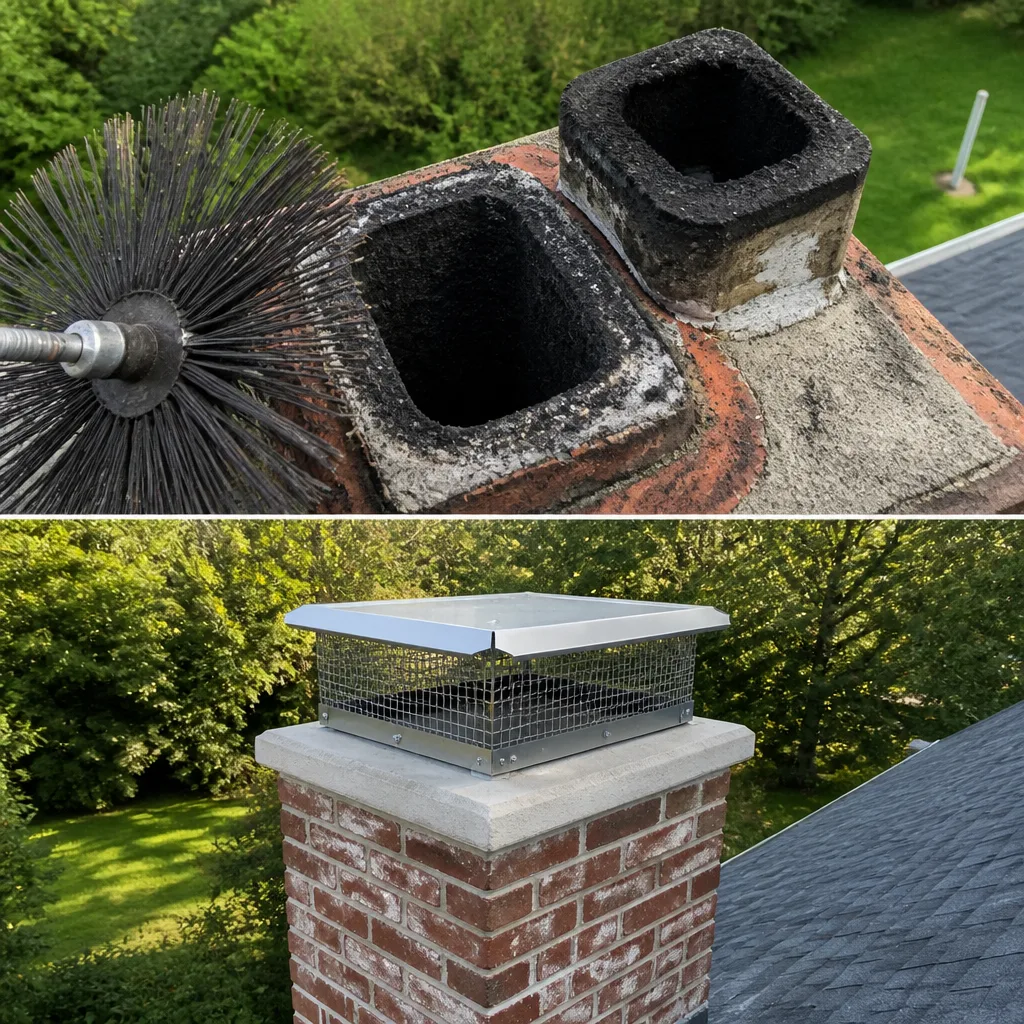
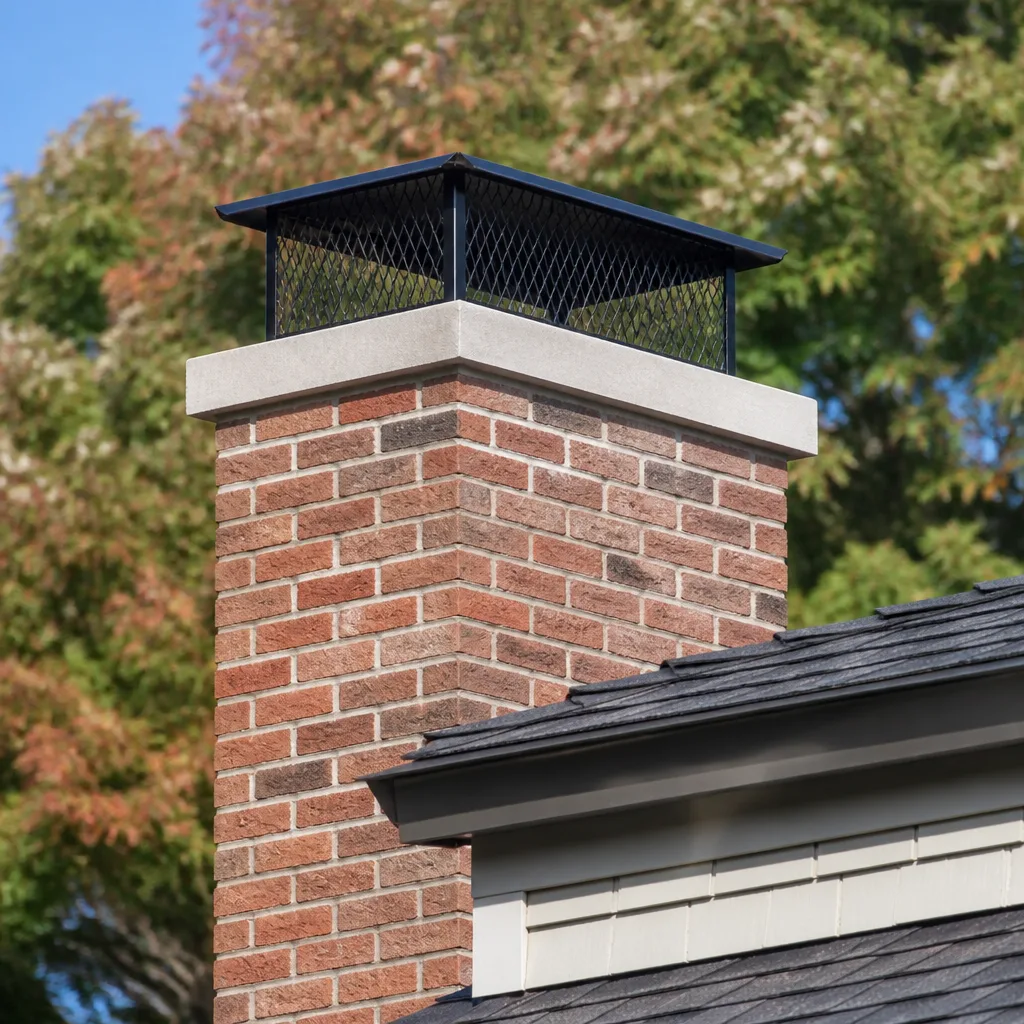
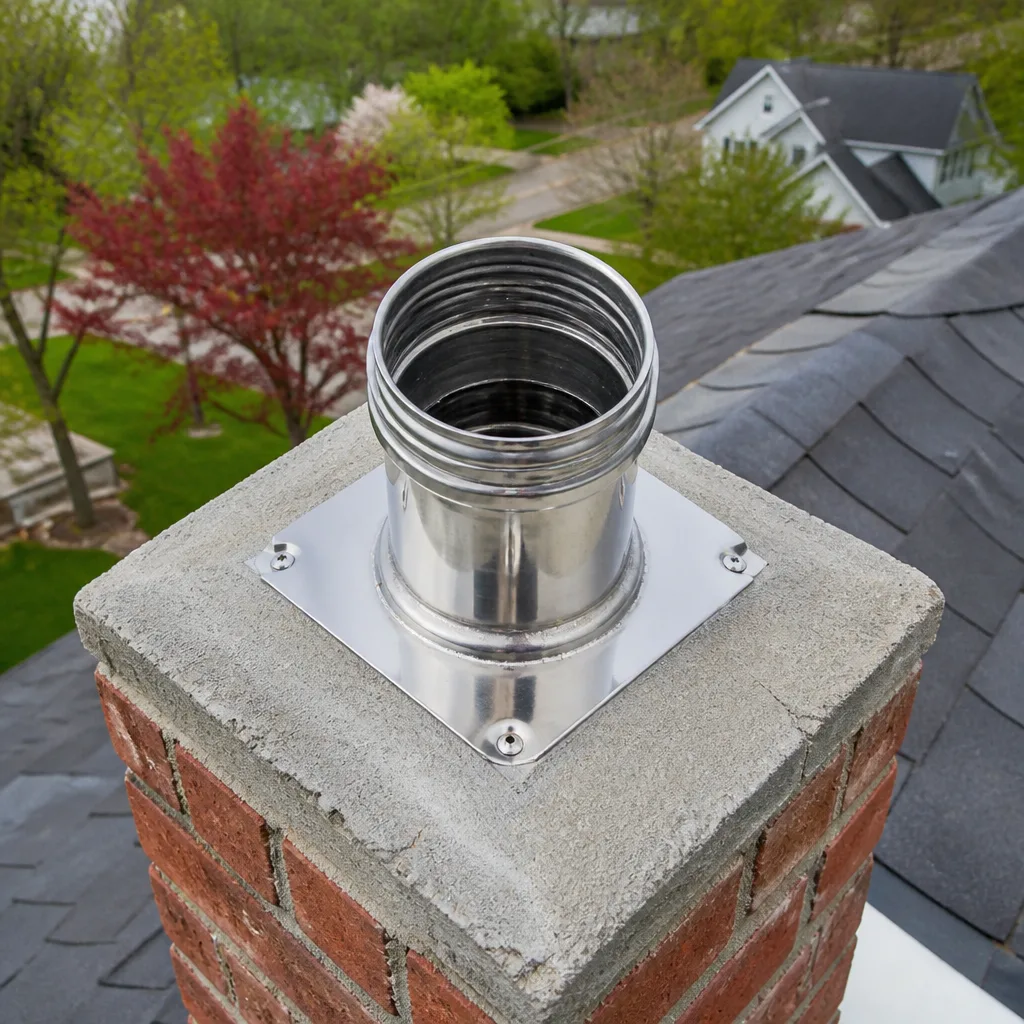
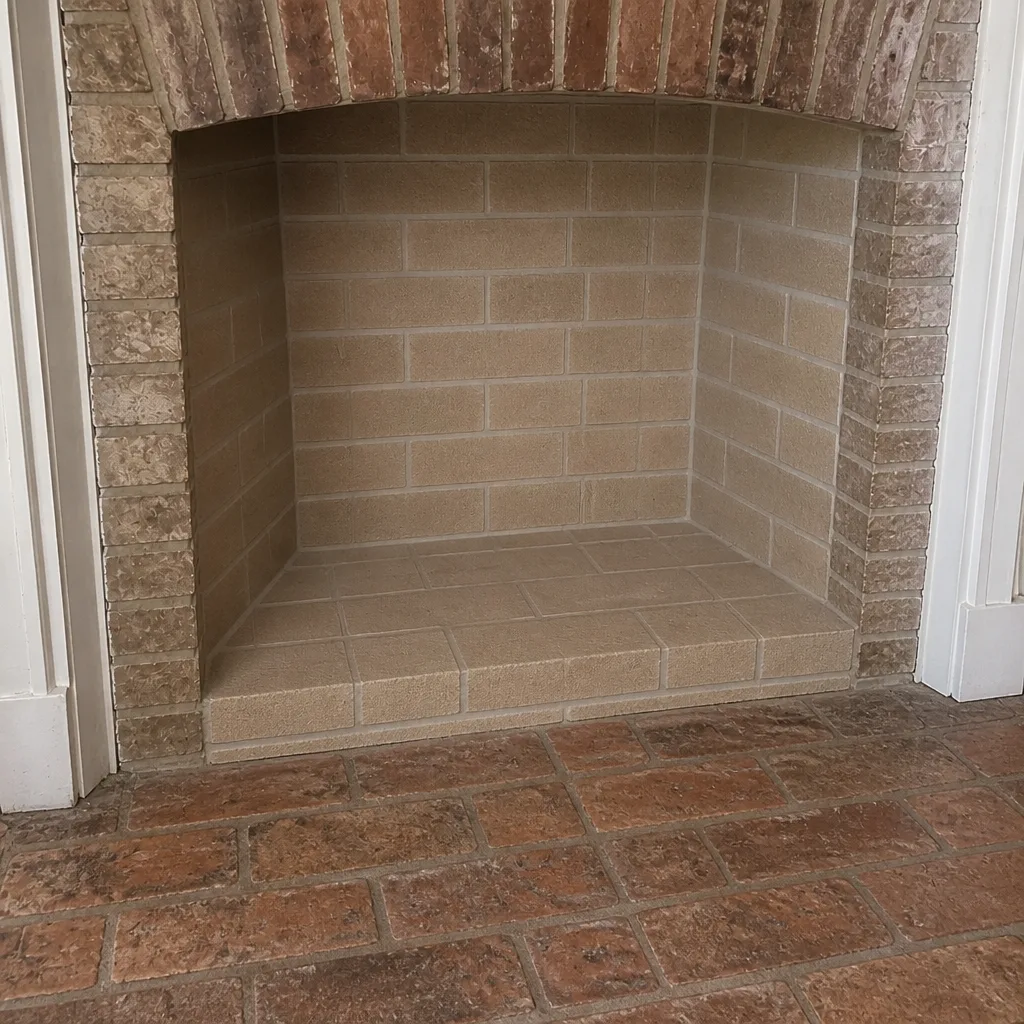
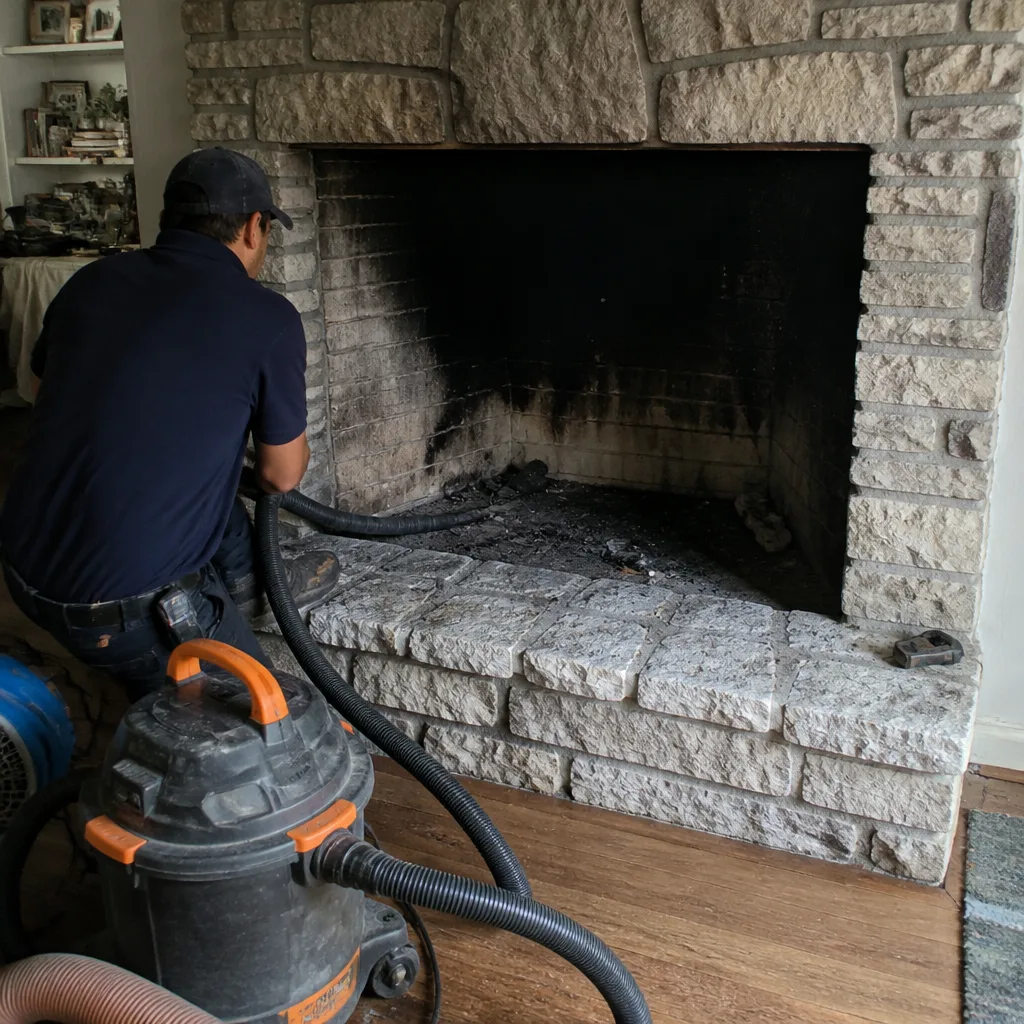
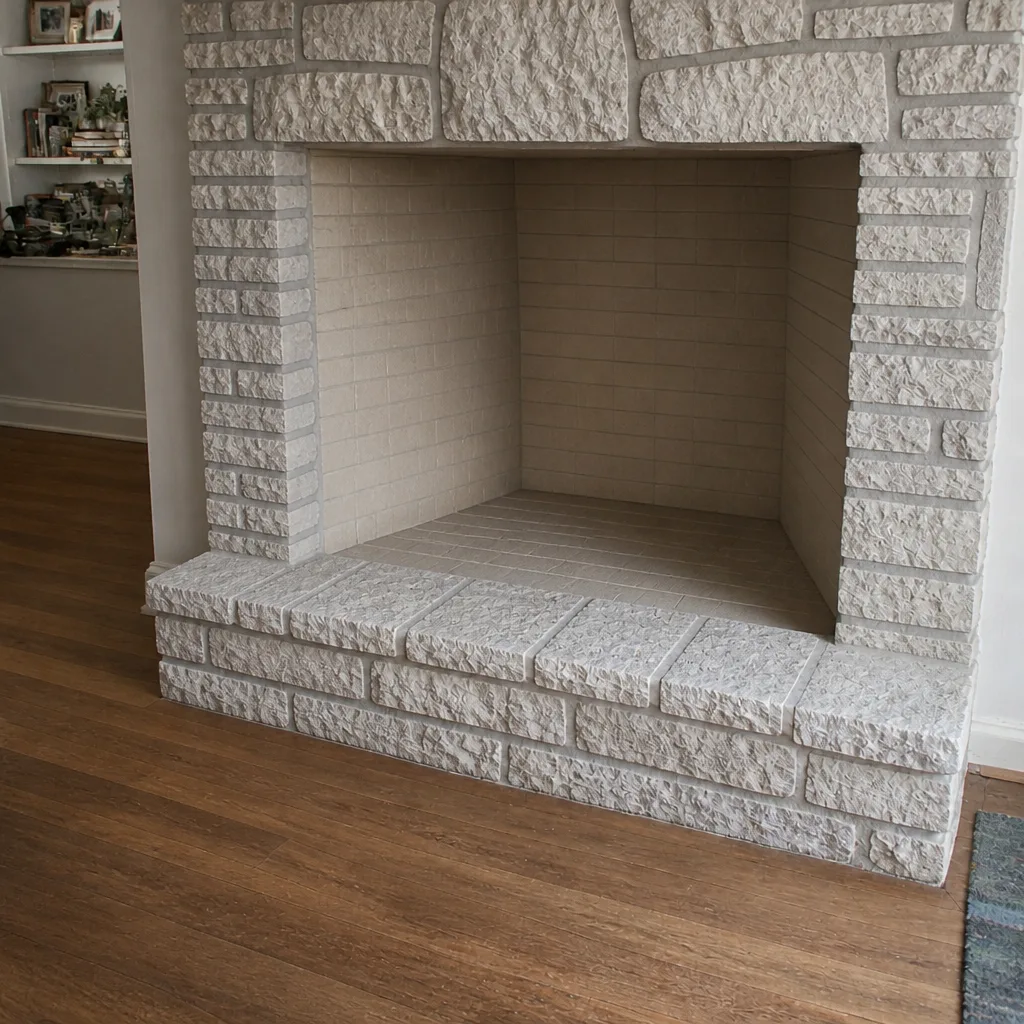
See the difference
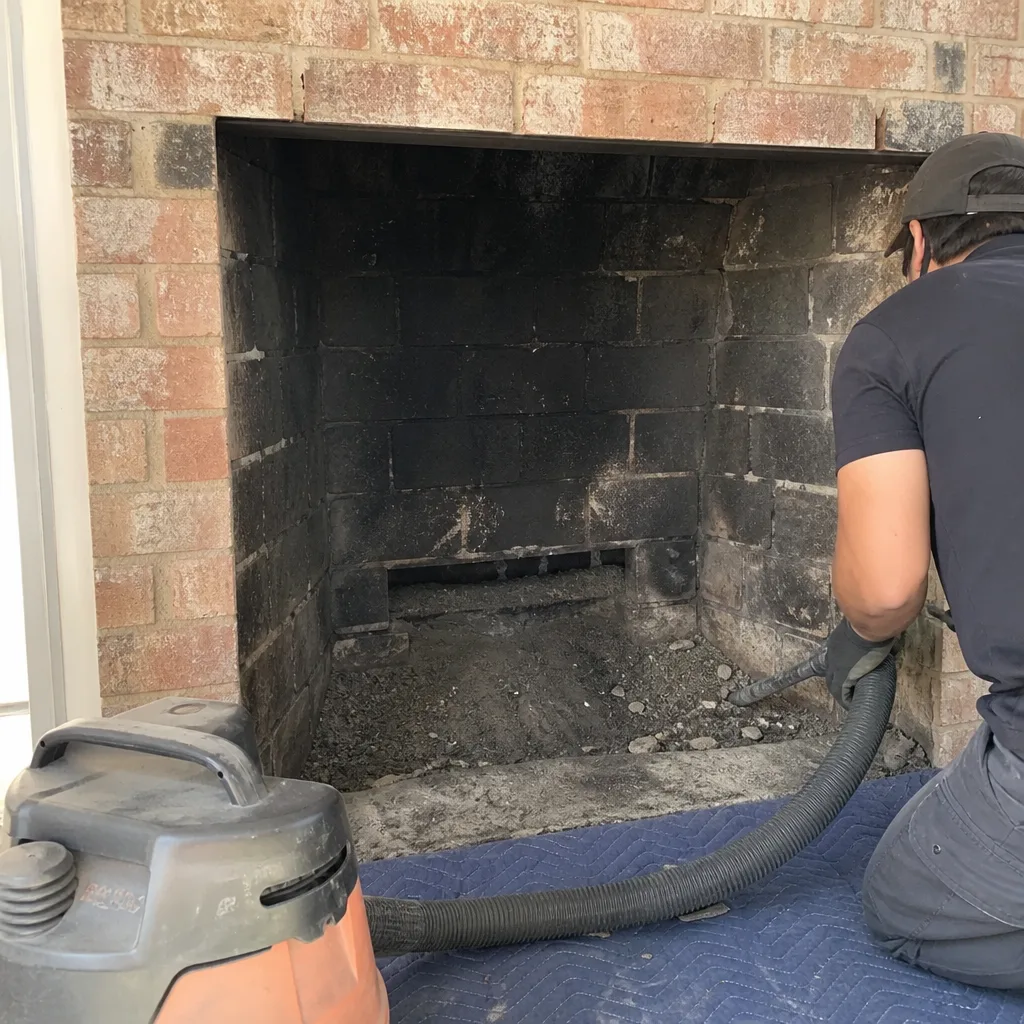 Before
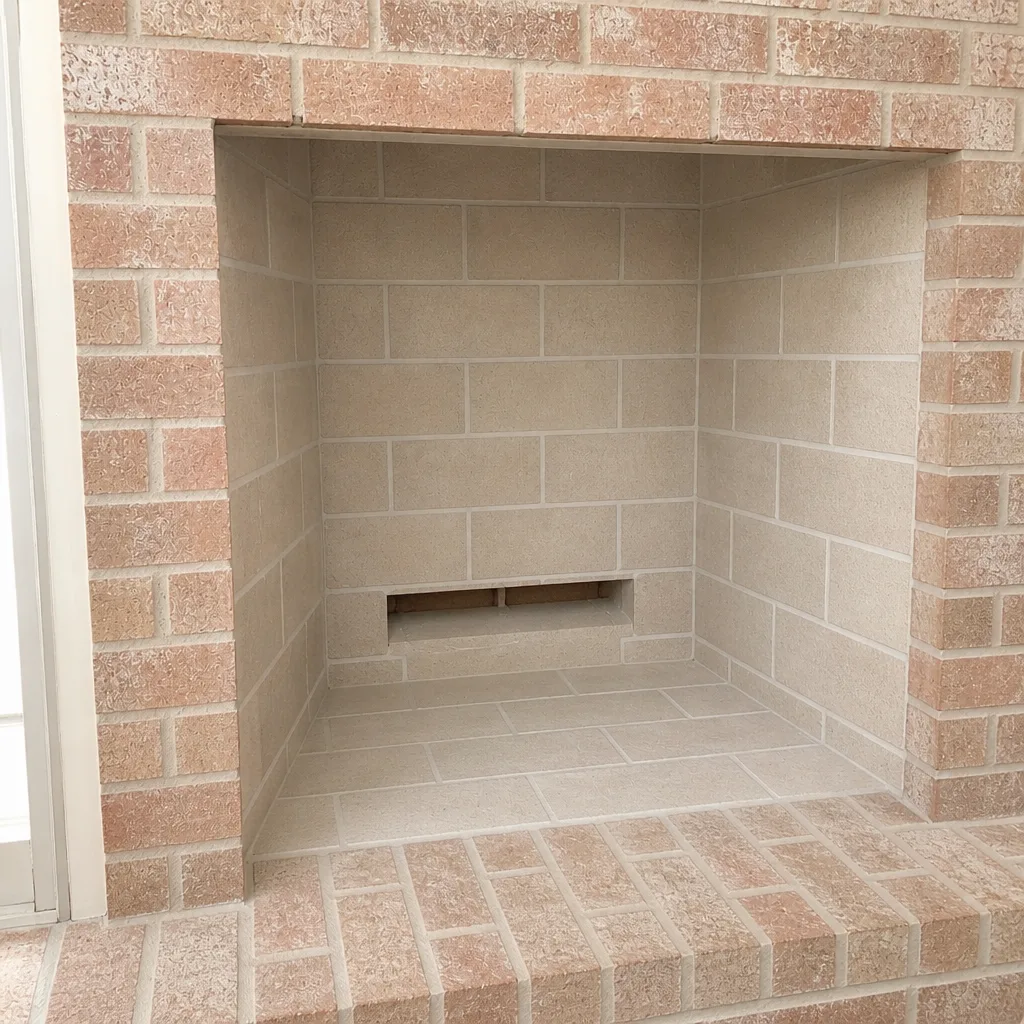 After
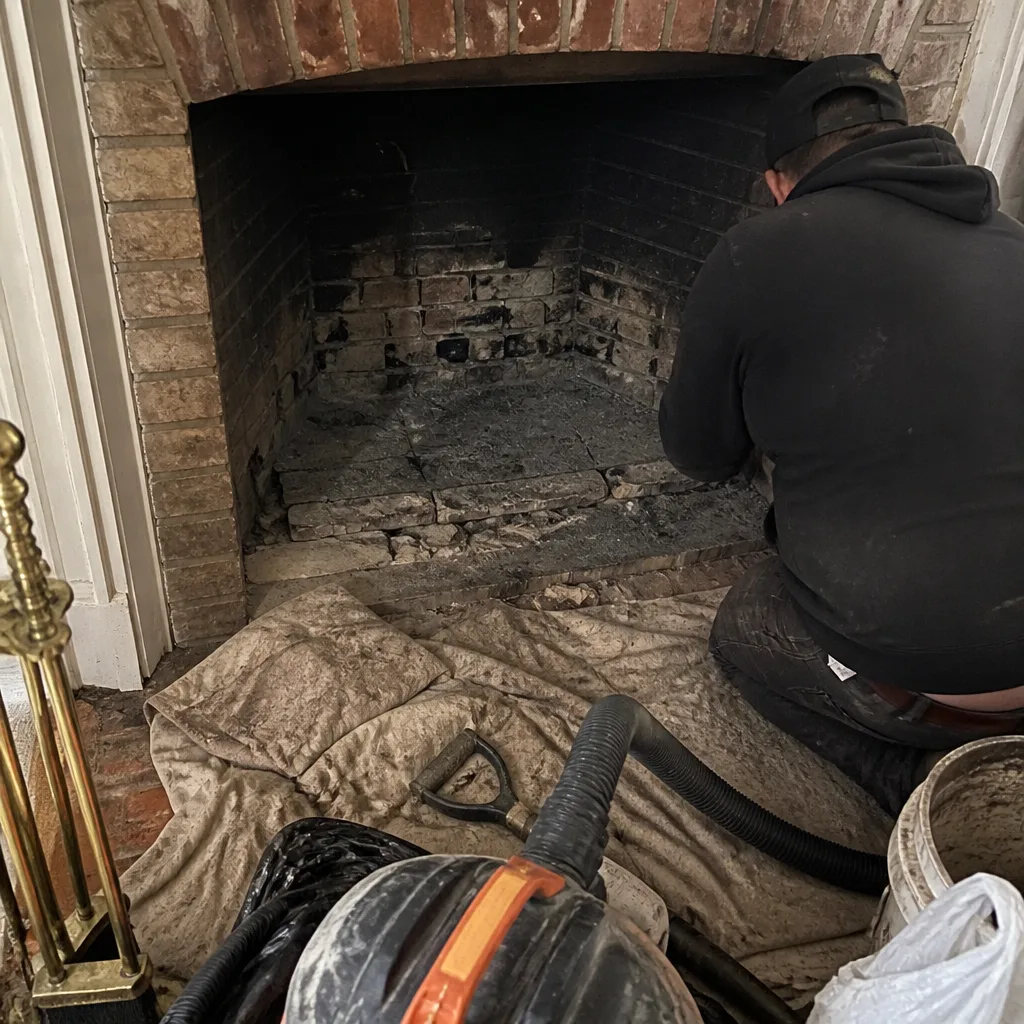 Before
 After
 Before
 After
When to Call a Professional
Some chimney issues are things you can notice yourself and some need a professional eye. Call us if you’ve seen smoke rolling back into the room, if the firebox smells strongly between fires, if you’ve noticed cracks in the crown or a loose cap, if you’ve heard animals in the flue, or if it’s simply been more than a year since the chimney was swept. Call us before the first fire if the chimney took storm damage, and call us in the off-season if you want to get ahead of the fall calendar. We handle the sweep, the repair, and the inspection as one company, so you don’t have to coordinate anyone else. Remington Chimney Sweep offers free estimates in Pasadena – call (833) 334-7488.
Frequently Asked Questions
Once a year is the standard for an actively used fireplace, and a yearly inspection along with it. Even with Pasadena’s short burn window, the off-season does enough damage – moisture, wildlife, mortar wear – that an annual sweep and inspection catches problems before they become repairs. If the fire sees heavy use, a mid-season sweep also makes sense.
Late summer, ideally late July through August, is the best window. That’s before the burn window opens and before the fall calendar fills up. Booking early also gives you time to complete any repair the inspection turns up, so the chimney is ready for the first fire. Call (833) 334-7488 for an exact quote – estimates are free.
Check the cap and spark screen, the crown, the flashing at the roofline, and the masonry for cracks. Then have the flue professionally inspected before the first fire, because the inside of the flue is where storm damage hides. Anything you notice from the ground is worth a closer look inside.
Because the fire isn’t burning and the chimney is exposed to months of humidity, heavy rain, and wildlife. Moisture intrusion softens mortar, a damaged crown or cap lets water into the masonry, and animals nest in the idle flue. None of it is visible from the living room, which is why the pre-season inspection matters.
Yes, if it’s been a year. A chimney can have a failing crown, a loosened cap, or a cracked flue tile without any obvious sign in the firebox. The inspection is how you find out, and problems found early are usually a small repair instead of a larger one. Call (833) 334-7488 to book one.
A properly sized cap with an intact spark screen sheds rain and keeps animals out while still letting the flue breathe. The mistake is a cap that’s too tight or a “sealed” chimney that traps moisture inside. The goal is to shed water off the top while leaving the flue open to vent.
The Bottom Line
Chimney care in Pasadena follows a different calendar than most of the country. The fire runs for about 90 days, and the nine months around it are when the real damage happens through moisture, wildlife, and mortar wear. The practical takeaways: book your sweep in late summer, get the post-storm inspection before the first fire, protect the crown and cap without sealing the flue, and use the off-season for the repairs that keep the chimney sound year after year. We specify professional-grade materials on every job, and we’ll tell you what your chimney needs and what it doesn’t.
Call (833) 334-7488 for a free estimate. We answer 24/7. Fast dispatch from 7am to 7pm, Sunday through Friday.
Written by the team at Remington Chimney Sweep.